
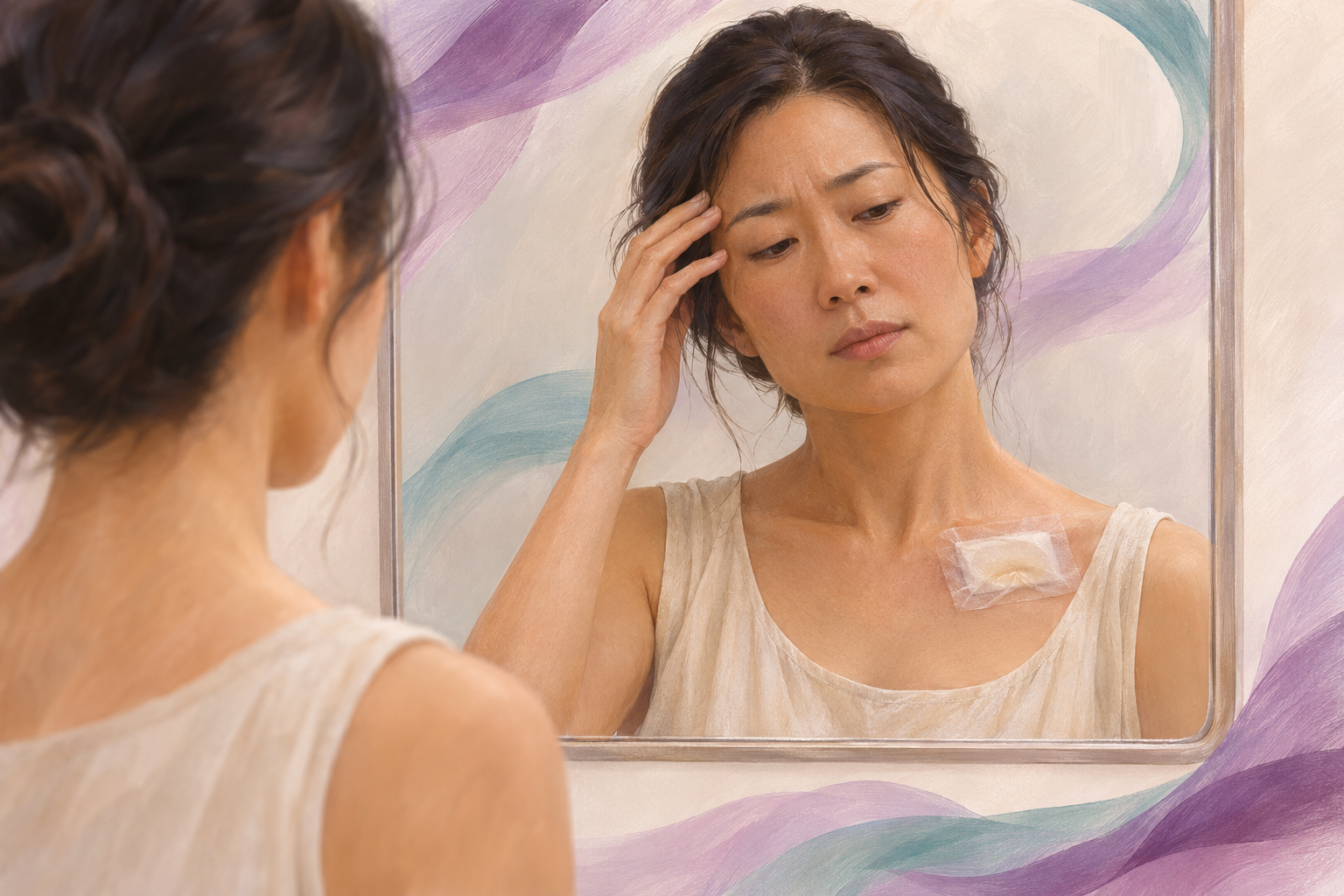
A burn, a cut, an accident or an operation—and suddenly you’re looking at an area of skin that feels unfamiliar. You may be wondering how to wash, what position to sleep in, whether you should cover it, and whether it will leave a scar.
Perhaps you’ve received treatment and have another appointment in ten days, maybe to have stitches out. But what are you supposed to do in between?
I’ve sat with many people who are frightened, confused about what to do and fearing the worst. Clear advice and reassurance can make an enormous difference.
This article focuses on the first three weeks after a skin injury or surgery: supporting healing, recognising when you need help and understanding when scar care becomes appropriate.
Through many years working as a physiotherapist in burns and plastic surgery, including acute hospital care, I’ve worked closely with people as their wounds heal and develop into scars.
I’m discussing wound healing here because how quickly and well a wound heals can have a powerful influence on the scar that follows. For assessment and treatment of the wound itself, seek advice from your treating team, a wound care specialist or another appropriate healthcare professional. My aim is to help you understand what matters, what to ask and when to reach out for support.
First, does your injury need urgent attention?
Seek emergency help for uncontrolled bleeding, a very deep or extensive injury, loss of feeling or movement, or a serious burn. Burns involving chemicals, electricity or possible smoke inhalation also need urgent medical assessment.
The size of an injury does not determine whether it needs medical attention. Even a tiny wound can leave a scar with a significant effect on appearance, comfort or movement, particularly on the face, hands or near a joint. Early assessment and appropriate treatment may help prevent or reduce those problems.
Bites, punctures, wounds containing dirt or foreign material, and wounds with separated edges should be assessed promptly. If you’re unsure, seek advice rather than dismissing an injury because it looks small.
If you’re unsure where to go, NHS 111 or urgent care can help direct you. You don’t have to decide the depth of a burn or whether a cut needs stitches yourself.
Why does early wound care matter for the scar?
One of the most important foundations of scar management is helping the wound heal promptly and without complications.
Think of these early days as laying the foundations of a building. What happens now influences what can be built afterwards.
The question isn’t simply whether a wound can close on its own, but how well it can heal and what will replace the damaged tissue. A superficial injury may heal largely through regeneration - replacing damaged skin with similar skin - with little or no scarring. Deeper damage is more likely to be repaired with scar tissue, and may need surgical help.
Some deeper wounds can eventually close without surgery, but prolonged healing may lead to considerable scarring and tightening. Appropriate treatment, whether dressings, stitches, glue, a skin graft or another procedure, can help achieve timely healing and reduce complications. This is why early assessment matters, rather than simply waiting to see whether the wound closes.
The depth and location of the injury, how long it takes to heal, infection and repeated breakdown can all influence the scar that remains. Your medical history, including conditions such as diabetes, as well as smoking, nutrition and the amount of tension on the wound can also affect healing and the eventual scar.
That’s why, at this stage, getting the wound care right matters more than searching for an impressive scar cream.
If you have a burn
Not all burns leave a lasting scar.
A superficial burn may heal with little lasting change. Deeper burns can have very different consequences and need specialist care.
Depth and healing time help us judge the risk. A useful rule of thumb can be burns healing within three weeks generally have a lower risk of significant raised scarring. Some may still leave pigment changes, and the rule isn’t a guarantee.
Importantly, three weeks is not a period to wait before seeking advice.
Effective first aid makes a big difference
For a thermal burn or scald, cool the area under cool running water for 20 minutes, as soon as possible. Cooling remains effective when started up to three hours after the injury.
Remove nearby jewellery and clothing if they aren’t stuck. Keep the rest of the person warm, especially a child. Don’t use ice, butter, toothpaste or creams as a substitute for cooling.
After cooling, loosely lay cling film over the area while arranging appropriate help. Don’t wrap it around a limb or put it over the face.
The British Burn Association’s first-aid guidance provides further information. Chemical and electrical injuries need additional precautions and urgent assessment.
Where should I seek help?
Some small, superficial burns can be managed at home after appropriate first aid. But size alone cannot tell you whether a burn needs medical attention.
Seek urgent hospital assessment for a large or deep burn, a chemical or electrical burn, a burn affecting the face or genitals, or one extending all the way around a limb. Call 999 if there is breathing difficulty, possible smoke inhalation or serious illness.
Seek prompt advice for burns affecting the hands, feet or a joint. Children and people with conditions that may affect healing, such as diabetes, also need particular care.
If you’re unsure about the depth or how to manage the injury, NHS 111 can direct you to the appropriate service. Some burns can be managed by a GP or practice nurse; others need specialist burns care.
What happens over the following days?
Follow the dressing and review plan you’ve been given. Don’t burst blisters or remove skin yourself.
Contact your treating service if the dressing becomes wet, slips, leaks or no longer protects the area. A dressing intended to stay in place for several days shouldn’t automatically be removed every day to “check underneath”.
Seek reassessment sooner than planned if pain increases, the burn changes, there are signs of infection or you feel unwell.
If the burn is not healed or nearly healed by ten days, ask for specialist burns advice if you are not already receiving it. Don’t wait until then to seek help with a concern.
If you have a cut, graze or laceration
For a small, straightforward injury, the initial priorities are to stop bleeding, gently clean away contamination and protect the area.
Apply firm pressure with a clean cloth or dressing to control bleeding. Don’t remove an embedded object or press directly onto it. Get urgent help if bleeding is heavy or won’t stop.
Small wounds can usually be rinsed with clean tap water and covered with an appropriate dressing. Deeper, gaping or contaminated cuts need professional assessment. Your tetanus vaccination history may also need checking.
A superficial graze and a deep laceration are different injuries. Damage involving the deeper skin layers is more likely to leave a scar, but the early appearance doesn’t reliably tell you the final result.
If the wound has been closed with stitches, strips or glue, follow the instructions for that closure. Creams, soaking or picking at glue can interfere with the repair.
If you have a surgical wound
This might follow removal of a skin cancer, another operation, or reconstruction involving a graft or flap.
Follow the instructions from your surgeon and their team - and ask if you’re unsure how to put them into practice.
Advice varies with the procedure, the closure and the dressing. A graft may need protection from movement that would be appropriate for a different wound. Glue and adhesive strips also have their own care requirements.
You may be advised to keep the dressing clean and dry, protect the area from pulling and reduce swelling through positioning or elevation.
But “keep it dry” doesn’t answer every everyday question. Does it mean the dressing must stay dry? Can you wash around it? Can you shower with protection? These are reasonable questions, and you deserve clear answers.
Avoiding excessive pulling across a healing surgical wound helps protect the closure and may reduce the risk of the scar stretching or becoming raised. Follow your team’s advice about lifting, exercise and supporting the area, while continuing the movement they recommend.
In my practice, if I identify tension onto the scar that can be reduced with taping, I often use this to support the area. The timing, choice of tape and application need to suit the wound and the condition of the surrounding skin.
Questions worth asking before you leave
The advice you receive may seem clear at the time, but once you’re home and trying to get on with everyday life, you may realise you need more detail. These questions can help you get practical guidance that works for your situation:
How can I wash myself and the surrounding skin? Can I wash my face, shower or wash my hair?
What should I do with the dressing, glue or strips? When should they be changed or removed, and by whom?
How should I position the area? Should I elevate my foot or sleep with my head raised?
What movement and activity are appropriate? What should I avoid, and for how long?
What signs show that my wound is healing well, and what changes could mean a problem is developing?
When should I be reviewed? Do stitches need removing?
Who should I contact if there’s a problem—or if I’m simply unsure?
Written advice helps, but it may still need explaining. Asking again is completely reasonable.
How do I know whether the wound has healed?
People often tell me, “It hasn’t healed,” because the area still looks very different from their usual skin.
Sometimes the wound has closed: there is a continuous covering of new skin, with no open or weeping areas. What they’re seeing is the next stage of recovery.
Closed skin is an important milestone. It doesn’t mean the skin has regained its normal strength, appearance or barrier function.
It may look pink, red, darker, shiny or uneven. It may feel unfamiliar or sensitive. Recovery continues after the surface closes.
If there is still a scab, drainage, a gap or uncertainty about whether the surface has sealed, ask before starting scar treatments.
Please don’t judge the final result from these early weeks
What you see now is not the finished result.
Swelling, bruising, dressings, stitch marks and newly formed skin can make an injury look alarming. Many areas change considerably as swelling settles and healing progresses. Scar maturation then continues over months.
I can’t promise exactly how an individual scar will develop. But I can often reassure someone that the appearance frightening them today is not what we expect to remain unchanged.
For now, try to suspend judgment. Focus on helping the area heal, attending reviews and getting answers to the questions troubling you.
A healthcare professional experienced in wounds and scars can often give you a clearer idea of how your particular injury is likely to change over time and what you can realistically expect.A healthcare professional experienced in wounds and scars can often give you a clearer idea of how your particular injury is likely to change over time and what you can realistically expect.
What can I do to support healing?
Give your body the basics it needs: adequate food, protein, fluids, rest and sleep. If your appetite is poor, you’re losing weight or you have a condition affecting healing, tell your treating team.
Protect the area from knocks and excessive pulling. Reducing tension across the healing wound can help limit stretching of the developing scar. Continue appropriate movement to help manage swelling and prevent stiffness, following your team’s advice about activity and any surgical repair.
Avoid picking or scrubbing the healing area, and check before introducing new creams or treatments, as some may irritate the skin or interfere with dressings or wound closure.
Once the skin has closed, what about scar prevention?
When the skin is sufficiently healed and robust, we can consider:
Gentle cleansing: wash the healed area regularly to keep it clean, using a gentle cleanser and avoiding scrubbing or products that irritate the new skin. Pat dry gently.
Moisturisation: supporting the recovering skin barrier and managing dryness. My article on moisturisation and scars explains this in more detail.
Sun protection: initially through suitable covering and shade, then sunscreen on healed skin where appropriate. Newly healed areas can be particularly vulnerable to sun damage and pigment changes.
Silicone: an option for selected scars, including preventive use before a scar becomes raised. It needs to suit the skin and be introduced appropriately. See Silicone for scars: does it help, and how should you use it?
Protection from excessive tension: while allowing the movement needed for your recovery.
Massage, where indicated: it isn’t an automatic next step simply because stitches have been removed or the skin has closed. See Scar massage: does it really help?
You don’t need to start everything at once. Stitches coming out is a review point, not proof that every area is ready for every treatment.
When should I ask for more help?
While your wound is healing, seek advice if pain is increasing, redness or colour change is spreading, the area is increasingly hot or swollen, there is concerning discharge or you feel unwell. Redness can be harder to recognise on brown or black skin, so pay attention to the other changes too.
Contact your treating team if there is unexpected or increasing fluid or bleeding through the dressing, or if you notice that the wound edges have separated. This separation is known as wound dehiscence and needs assessment. Keep dressings in place as instructed; you don’t need to remove them simply to check.
Once your treating team confirms the wound has healed and dressings or stitches are no longer needed, it is unlikely to reopen during normal day to day activity. Continue any precautions they recommend while the tissues regain strength. Tightness or pulling does not, by itself, mean the wound is coming apart.
Once the wound has healed, ask for scar advice if it becomes increasingly raised or thickened, remains troublingly red, restricts movement or feels stuck to the tissues beneath it.
In my experience, the team treating the original problem may understandably be focused on removing a cancer, repairing a broken bone or managing another important injury. You may receive excellent treatment for that problem without getting all the practical information you need about the scar that follows.
Start with your treating team for wound concerns, but please feel able to look further afield for scar advice. Resources such as Scar Therapy Network and My Scar Specialist can help you find information and explore support. You can also seek a qualified healthcare professional experienced in treating your type of scar.
You don’t need to wait until a problem becomes severe, or even until there is a definite problem. Feeling frightened or confused is reason enough to ask. Clear advice and reassurance can make these early weeks much easier to manage.
What matters most in these first three weeks?
Help the wound heal well. Protect it appropriately. Know your plan and whom to contact.
Once the skin is closed and ready, moisturisation, sun protection, selected silicone use and appropriate management of tension can support early scar care. Massage may have a role, but it should have a clear purpose. For more practical guidance, explore my Let’s Talk blogs on moisturisation, silicone and scar massage.
You don’t have to predict the final scar or navigate every decision alone. Good advice and reassurance can make these early weeks far less frightening. Good wound care is one of the first steps in scar prevention: how your wound heals helps shape the blueprint for the scar that follows. Early care is an opportunity to prevent or reduce problems before they develop, giving your skin the best chance to heal well and limiting the scar’s future impact on your life.